If you have a younger child, you probably know the homework meltdown. It starts with a sigh, then a pencil gets thrown, and suddenly there are tears over one worksheet. In the moment, it can feel like the homework is the problem. But often, feeling overwhelmed may be making the task harder to manage.
Why calm comes first
When children feel overwhelmed, it can be harder to focus, remember information, and solve problems. That’s why pushing through a meltdown rarely works. Helping your child settle first can make it easier to return to homework.
What is a feelings thermometer?
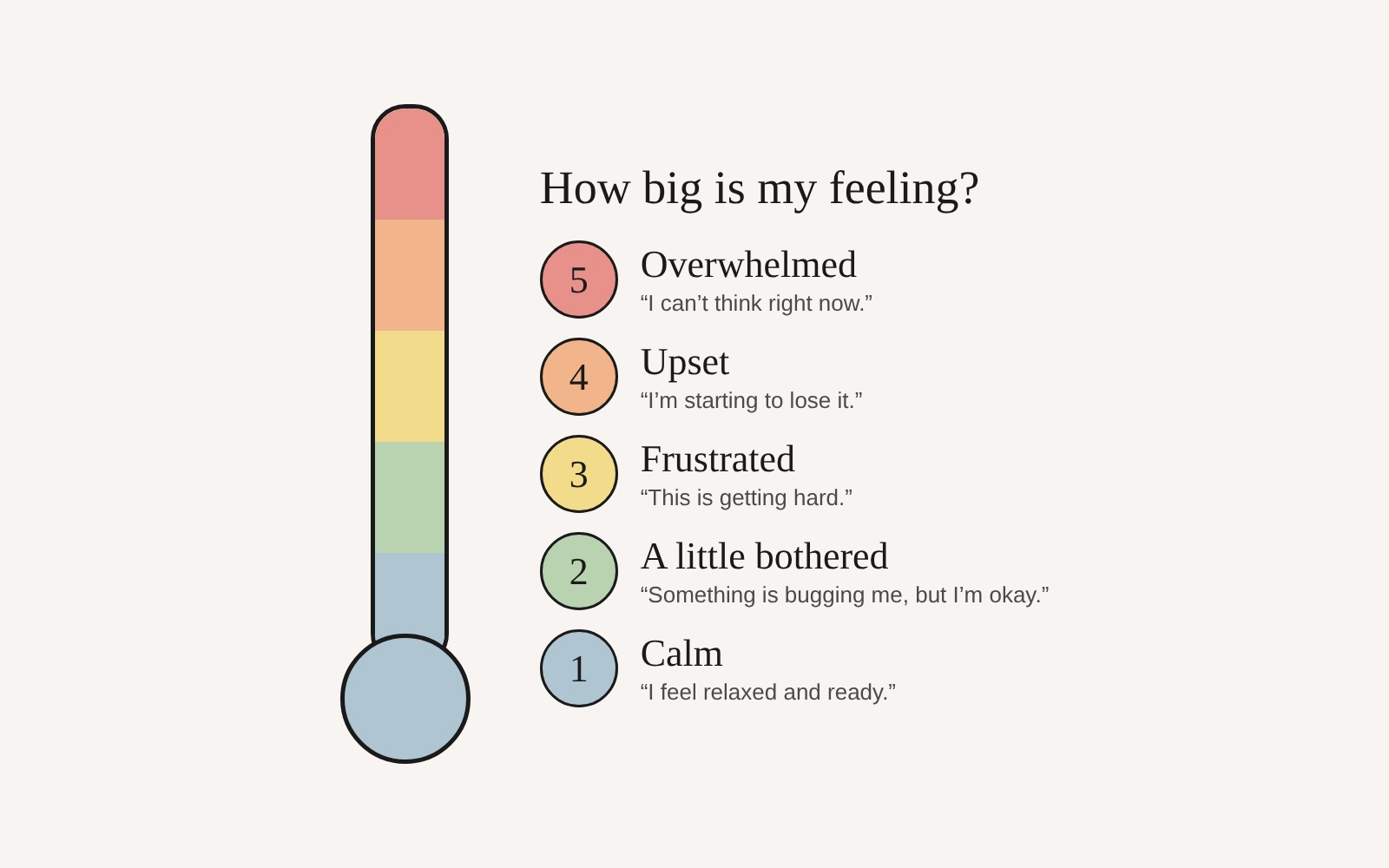
A feelings thermometer is a simple picture that helps kids notice and name how big their feelings are. It usually goes from 1 to 5, with colors from calm to overwhelmed:
- 1, Calm (blue or green): “I feel relaxed and ready.”
- 2, A little bothered: “Something is bugging me, but I’m okay.”
- 3, Frustrated (yellow): “This is getting hard.”
- 4, Upset (orange): “I’m starting to lose it.”
- 5, Overwhelmed (red): “I can’t think right now.”
You can draw one together on paper, which makes it more meaningful for your child.
How to use it with homework
Check in with your child before starting and again during breaks. A 3 signals building frustration, which makes it a good time to try a regulation strategy before feelings intensify. At a 4 or 5, pause homework and focus on helping your child settle before returning to it.
A short movement break, slow breathing, a quieter space, or support from a calm adult may help.
Think of the thermometer as a guide rather than a set of rules. Different children may need different kinds of support, so notice what helps your child and adjust from there. Regulation doesn’t mean making feelings disappear, and your child doesn’t need to feel perfectly calm to learn. The goal is helping them feel settled enough that returning to the task feels manageable.
It can also help to practice these strategies when your child is already calm, so they feel familiar when they’re needed.
Stay calm yourself
Kids borrow our calm. If your voice stays steady and gentle, it helps your child settle faster. It’s okay to say, “Let’s take a break and come back to this when we both feel calmer.”
When meltdowns keep happening
If homework meltdowns happen most days, it may be a sign that the work feels too hard or that something else is getting in the way. Educational therapy and parent coaching can help you understand what’s going on and build a plan that brings more calm to homework time.